
News & Insights
Rated-3 Data Centres Explained: For Malaysian Businesses

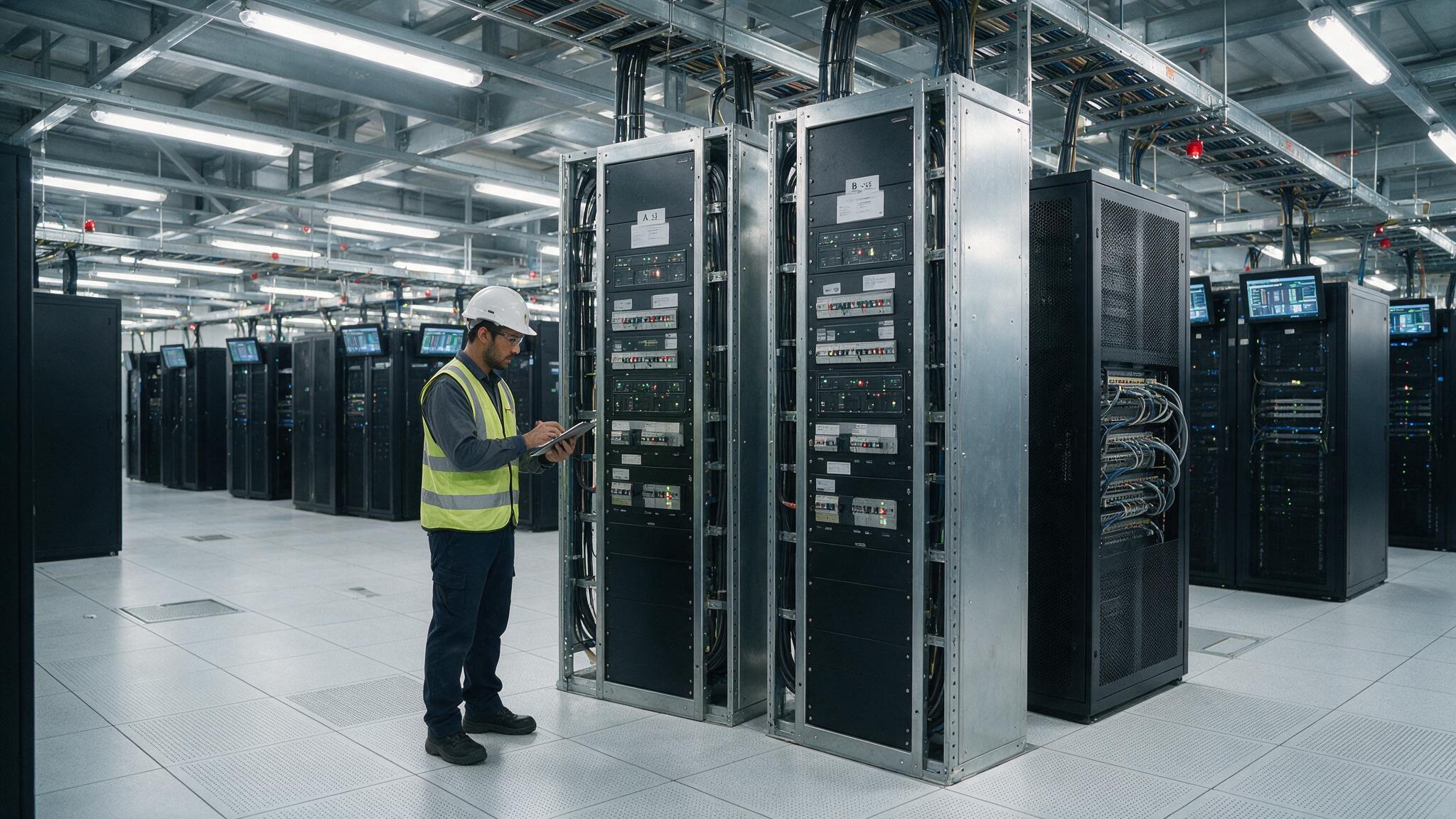
A Rated-3 data centre is one certified under ANSI/TIA-942 as concurrently maintainable, which means the facility can carry out planned maintenance on power and cooling without taking your systems offline. If you are comparing data centre providers in Malaysia, the rating is one of the few claims in a proposal that an independent auditor has actually checked.
This explainer covers what each rating level means, what concurrent maintainability looks like in practice, why the rating does not come with an uptime percentage, and how to verify a claim rather than take it at face value.
What Is a Rated-3 Data Centre?
ANSI/TIA-942 is the telecommunications infrastructure standard for data centres, published by the Telecommunications Industry Association (TIA). Its resilience classifications run from Rated-1 to Rated-4. The current revision, ANSI/TIA-942-C, was published in 2024.
Rated-3 is defined as Concurrently Maintainable Site Infrastructure. It has two halves, and both must be present:
- Redundant capacity components: more units of power and cooling plant than the load strictly needs.
- Multiple independent distribution paths: more than one route carrying that capacity from source to load.
A facility with spare units but only one distribution path is Rated-2, not Rated-3. The single path is the constraint, because work on it still means an outage.
The standard assesses a facility across architectural, electrical, mechanical and telecommunications infrastructure. When a provider quotes a rating, ask which parts of the facility it covers, since a strong electrical design does not compensate for a weak telecommunications one. Their data centre management documentation should state this.
The 4 TIA-942 Rating Levels, Side by Side
| Rating | Official name | Capacity components | Distribution paths | What it means in practice |
|---|---|---|---|---|
| Rated-1 | Basic Site Infrastructure | Single | Single, non-redundant | Any maintenance or component failure can take the load down |
| Rated-2 | Redundant Capacity Component Site Infrastructure | Redundant | Single | Spare plant absorbs a component failure, but path maintenance still requires downtime |
| Rated-3 | Concurrently Maintainable Site Infrastructure | Redundant | Multiple, independent | Any component or path can be removed for planned work with the load still running |
| Rated-4 | Fault Tolerant Site Infrastructure | Redundant | Multiple, independent | Concurrently maintainable, and also absorbs a single unplanned fault without downtime |
Ratings are cumulative in effect: each level assumes the capability of the one below it.
What “Concurrently Maintainable” Means in Practice
Concurrent maintainability is about planned work. It means any single capacity component, and any single element of a distribution path, can be taken out of service deliberately without affecting the load.
In practice that is the difference between two conversations with your provider. In a Rated-2 facility, replacing a UPS battery string or servicing a chiller is negotiated as a maintenance window you have to absorb. In a Rated-3 facility, it is scheduled work you are notified about.
Three terms you will see in the same proposals:
- N: the capacity required to serve the load with nothing spare.
- N+1: one additional unit beyond what the load requires, so one unit can fail or be serviced with capacity still intact.
- 2N: two complete and independent sets of capacity, each able to carry the full load on its own.
One limit worth being clear about. Concurrent maintainability covers deliberate work, not every unannounced failure. Tolerating an unplanned single fault without downtime is what separates Rated-4 from Rated-3. A Rated-3 facility is a well-engineered facility, not an outage-proof one.
Why a Rating Does Not Come With an Uptime Percentage
TIA-942 does not assign availability or uptime percentages to its rating levels. The standard describes infrastructure attributes, not a predicted number of minutes lost per year.
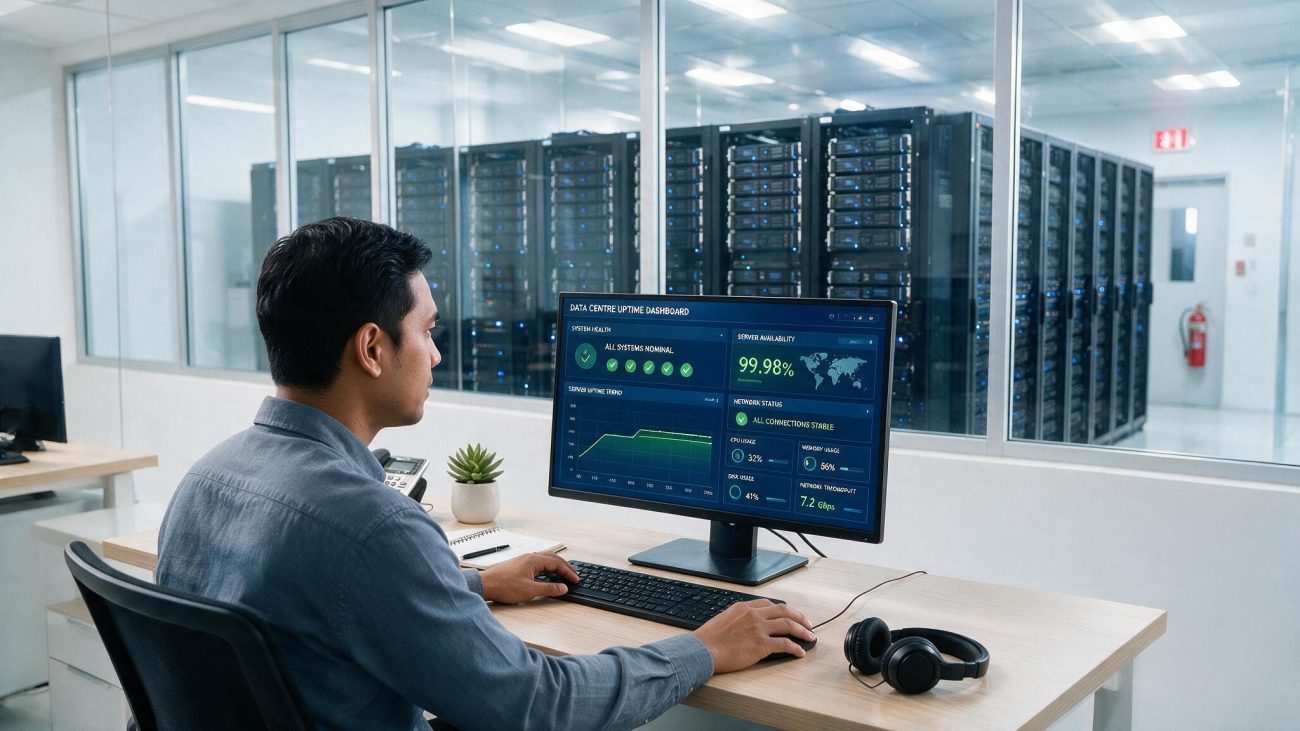
So when a proposal shows both a rating and an availability figure, those two claims come from different places. The rating comes from an audited standard. The percentage comes from the provider’s own service level agreement, which they wrote.
Both are worth having, and they answer different questions:
- The rating tells you what the building can absorb without going down.
- The SLA tells you what the provider will commit to commercially, and what they owe you if they miss it.
Ask for both documents. Then read the SLA’s exclusions, its definition of downtime, and the cap on service credits, because a high percentage with wide exclusions is weaker than a lower one measured end to end.
Rated-3 and the Uptime Institute Scheme Are Not the Same Thing
Two separate classification schemes are in circulation, and they are used interchangeably in this market when they should not be.
ANSI/TIA-942 uses the word Rated, and its levels are Rated-1 to Rated-4. The Uptime Institute operates its own, independent classification, awarded by its own auditors against its own criteria. They are different standards, different bodies, and different audits.
A facility certified under one is not automatically certified under the other. The practical consequence: “Rated-3” and any similar-sounding label from the other scheme are not evidence of each other, so establish which scheme a provider is certified under before you compare two bids.
The 3 Types of TIA-942 Certification, and Which One to Ask For
This is where most rating claims turn out to be weaker than they first appear.
| Certification | What is actually assessed | Validity |
|---|---|---|
| Design | Review of the design documentation against ANSI/TIA-942 criteria | One year |
| Facilities | Physical onsite inspection confirming the built facility conforms | Three years, with surveillance audits in years 1 and 2 and a recertification audit in year 3 |
| Ready | Verification that a modular data centre product meets the standard’s design requirements | One year, with yearly recertification |
A design certificate confirms that the drawings conform. Only facilities certification confirms that the building, as constructed and operated, conforms. Both are legitimate, and they are not equivalent.
Two questions follow from that table. Which certification type does the provider hold, and what is the date on it? A facilities certificate outside its three-year cycle, or a design certificate presented as proof of an operating facility, is a different claim from the one being implied.
How to Verify a Rated-3 Claim
Ask for these seven things. A provider operating a genuinely certified facility can produce all of them.
- The certificate itself, naming the standard, the revision, the rating and the issue date.
- The certification type: design, facilities, or ready.
- The specific site the certificate covers, not the company or the group.
- Which infrastructure categories were assessed, and the rating for each.
- The most recent surveillance or recertification audit, and who conducted it.
- The SLA schedule, separately, with its definitions, exclusions and credit caps.
- A walkthrough of the hall you are being offered, including plant rooms and the fuel store.
Does Your Workload Need Rated-3?
Not every system does, and paying for resilience a workload does not need is a common way to overspend.
Work it out from two inputs. First, your recovery time objective per system: how long that specific system can be unavailable before the business takes real damage. Second, your regulator. A financial institution in Malaysia works to Bank Negara Malaysia’s Risk Management in Technology expectations, and healthcare and government buyers carry their own obligations, all of which shape the minimum acceptable answer regardless of budget.
A reasonable split for most Malaysian enterprises:
- Rated-3 or above: core banking, payments, clinical systems, anything with a recovery time objective measured in minutes and a regulator with an opinion.
- Rated-2 may be sufficient: internal systems, development and test environments, and workloads where a scheduled maintenance window is genuinely acceptable.
Mixing both across a portfolio is normal, and cheaper than treating every system as critical.
Where Strateq Fits
We have been operating data centres in Malaysia since 1989, which makes us one of Malaysia’s pioneer data centre providers.
Our Malaysian facilities are certified to ANSI/TIA-942-C. They are purpose-built, owned and managed by Strateq rather than leased space in a multi-tenant building: DC1 in Petaling Jaya (~88,000 sq ft) and DC2 at i-City, Shah Alam (~24,000 sq ft), with DC3 at Chai Chee, Singapore (~13,000 sq ft). The halls are designed for high resilience with redundant power and cooling.
If you are comparing facilities, read up on our data centre management page for how we run ours.