
News & Insights
Colocation vs Building Your Own Server Room in Malaysia

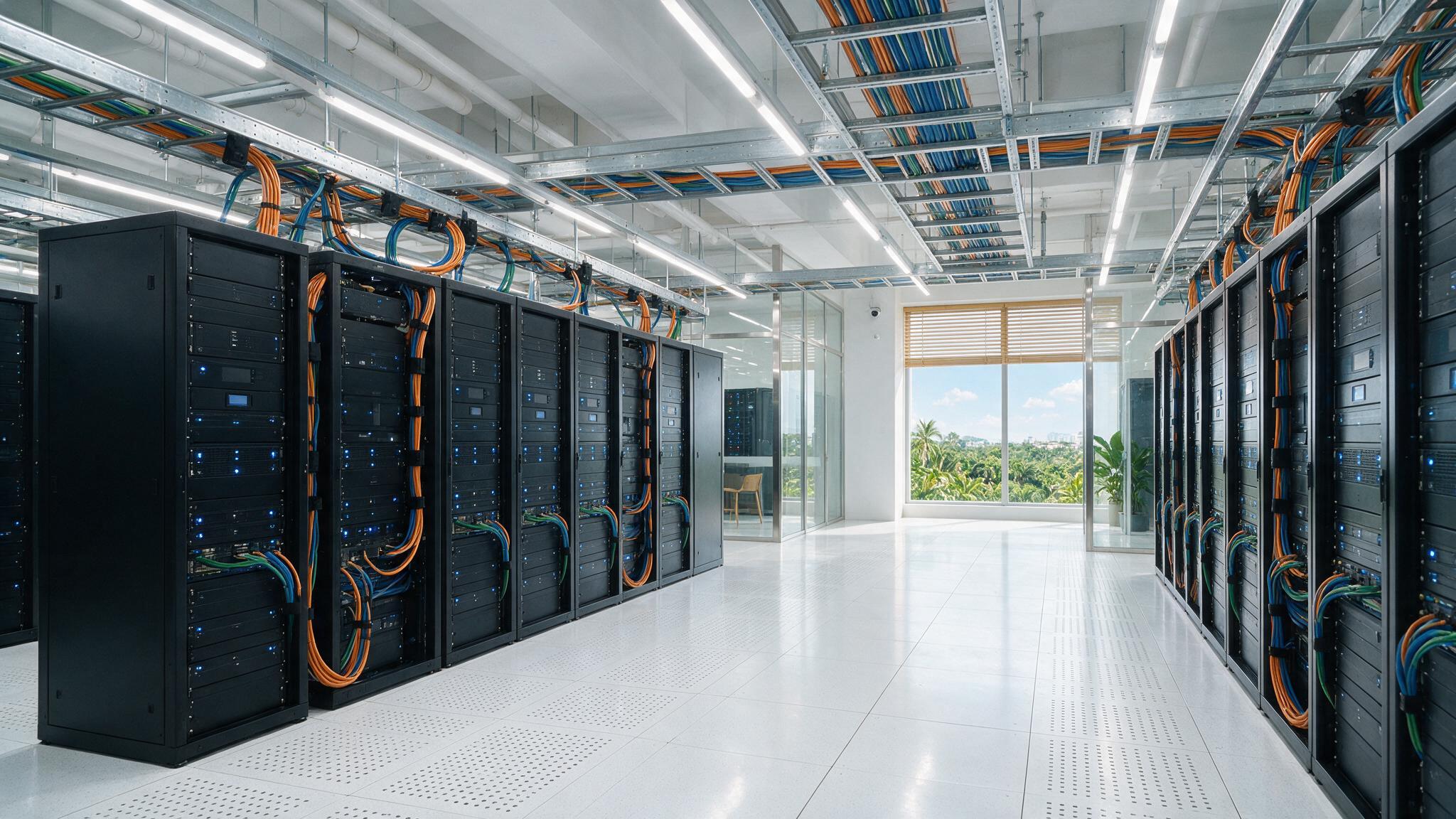
Colocation in Malaysia means renting rack, cage or private suite space in someone else’s purpose-built data centre and putting your own hardware in it. Building your own server room means becoming the operator: you buy the power, cooling, fire and security infrastructure, and you carry it for the next decade. If you are weighing the two, the honest comparison is not a price per rack, it is a total cost and total risk comparison across six lines, and one of them is a cost most in-house business cases leave out.
This guide sets out what each option actually includes, why Malaysian electricity pricing changes the arithmetic, and a method for working out your own break-even. It ends with the conditions under which each choice is genuinely the right one.
What Colocation in Malaysia Actually Includes
Colocation is space, power, cooling and physical security, sold as a service. You keep your hardware, your operating systems and your data. The provider keeps the building running.
What you are buying comes in three common shapes:
- Rack colocation: one or more full racks in a shared hall, with your equipment behind a locked cabinet.
- Cage: a physically partitioned area within a shared hall, for organisations that need separation between their racks and everyone else’s.
- Private suite: an enclosed room within the facility, with its own access control, for larger or more regulated deployments.
Three things to establish in any quote, because providers draw the line differently. What power is included and what is metered above it, whether remote hands is bundled or billed per incident, and what the cross-connect charges are for each carrier you want to reach, since connectivity is usually priced separately from space.
What Building Your Own Server Room Actually Requires
A server room is not a room with air conditioning. Built to a standard your auditors will accept, it is a small piece of infrastructure with its own capital and maintenance profile.
The capital items:
- Uninterruptible power supply, with batteries that are a consumable and need replacing on a cycle.
- Standby generator, plus a fuel store, a refuelling contract and somewhere legal to put both.
- Precision cooling sized for the heat your racks actually produce, not for human comfort.
- Fire detection and suppression appropriate to an electrical room, and the Bomba approval that goes with it.
- Access control, CCTV and the retention storage behind it.
- Structured cabling, containment, power distribution, environmental monitoring, and often a raised floor.
- Electrical supply upgrade, which can mean a TNB application and a substation conversation.
The items that get left out of business cases are the recurring ones: annual maintenance contracts on the UPS, generator and cooling plant, battery replacement, fire system servicing, insurance, and the floor space itself, which in a commercial building is space you are already paying rent on and could otherwise use.
The 6 Cost Lines to Compare
| Cost line | Building your own server room | Colocation |
|---|---|---|
| Capital | Large upfront outlay, depreciating, and sized for a load you have to guess at now | None for infrastructure; you fund only your own hardware |
| Electricity | You pay the IT load, plus the cooling to remove its heat, at your own tariff | Included up to a contracted level, metered above it |
| Maintenance | Separate contracts for UPS, generator, cooling and fire, each renewing annually | Carried by the provider as part of the fee |
| People | Continuous cover and multiple skill sets, either hired or on call-out | Included, with remote hands scoped in the contract |
| Space | Floor area inside premises you rent or own, unavailable for anything else | Rack, cage or suite you pay for and can hand back |
| Growth | Constrained by the room’s power and cooling ceiling; expansion is a project | Contractual, subject to what the provider has available |
Neither option is automatically cheaper. What the table shows is that the two options put the cost in different places: one converts capital into a fixed monthly figure, the other converts monthly cost into an asset you own and must maintain.
Why Malaysian Electricity Costs Change the Maths
Electricity is usually the largest single operating line, and the way it is billed in Malaysia works against a small in-house server room.
Under the tariff structure that took effect on 1 July 2025, a commercial or industrial bill separates into five components: energy charge, capacity charge, network charge, retail charge, and the Automatic Fuel Adjustment. For medium and high voltage supply, the capacity and network charges are calculated against billed maximum demand, defined as the highest 30-minute average recorded in the month.
Three consequences for a server room:
- A server room is a flat load, so it sets your peak. Maximum demand charges respond to the highest half hour, not to total consumption. Reducing kWh does not reduce that charge.
- Time-of-Use has little to offer. The peak window is Monday to Friday, 2:00pm to 10:00pm, and Time-of-Use is optional rather than mandatory. Shifting load away from the peak is a real lever for a factory. A room that runs at a constant draw around the clock has nothing to shift.
- Cooling is a second electricity bill. Every watt your servers consume becomes heat you pay again to remove. Any comparison that counts only the IT load understates the in-house figure.
Take your own average sen per kWh off a recent bill rather than using a published rate, because the five components and the AFA move. Then apply it to both the IT load and the cooling load.
Redundancy Is the Line Most Server Rooms Cannot Cross
Resilience is where the two options separate most sharply, and it is the hardest gap to close later.
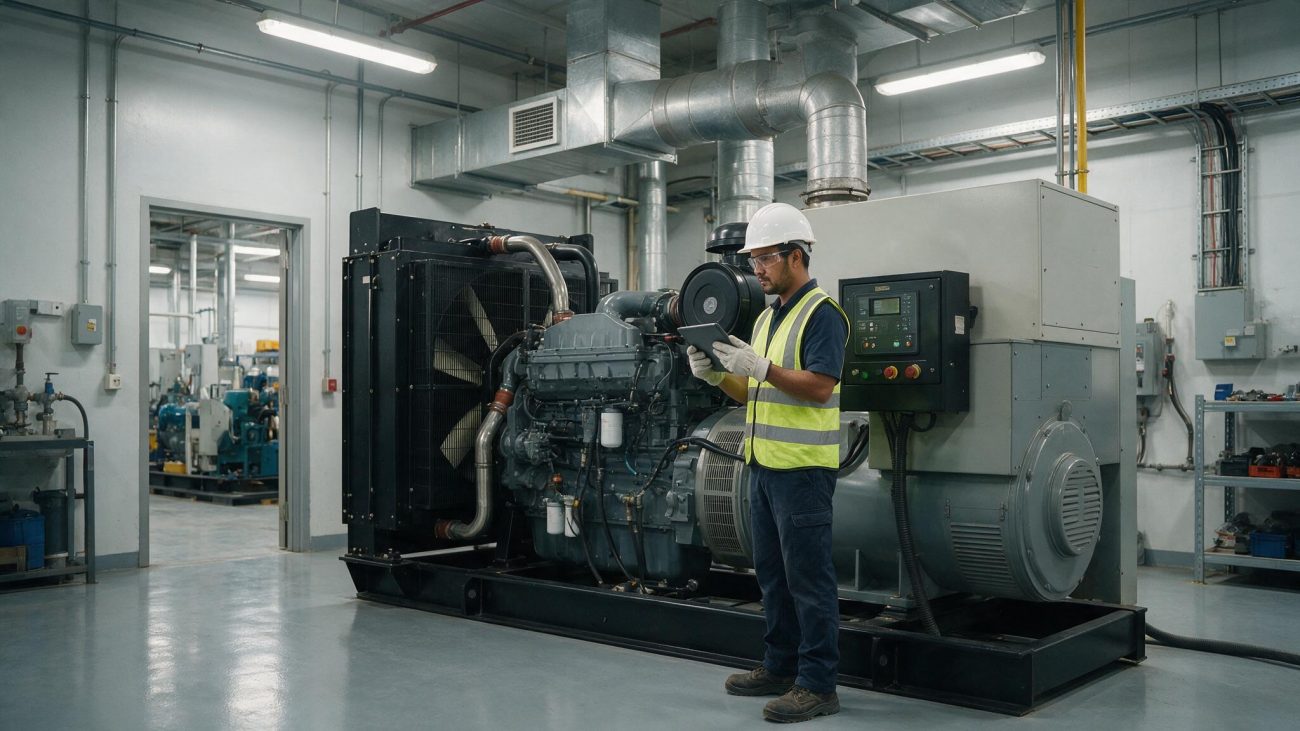
A typical in-house room has one UPS, one cooling unit, and either no generator or a share of a building generator sized for lifts and lighting rather than IT load. That configuration means a single component failure, and every piece of planned maintenance, becomes an outage or a weekend.
Purpose-built facilities are designed with redundant capacity components and multiple independent distribution paths, so a plant can be taken out of service for maintenance while the load keeps running. Retrofitting a second independent path into an existing office building is usually impossible rather than merely expensive, because it involves the electrical riser, the substation supply and the structure of the building.
The Physical Security Gap
Compare what actually stands between an unauthorised person and your hardware.
An in-house server room is usually one locked door, a card reader, and a camera. Access is granted informally, the log is rarely reviewed, and the people with keys accumulate over the years.
A purpose-built facility runs layered control across perimeter, building, hall, cage and rack, with 24-hour manned surveillance, 24-hour CCTV monitoring, multi-level access clearance, card control on doors and lifts, a command centre, and employee screening on hiring and at intervals afterwards.
There is also a category of assurance an office room simply cannot obtain. In Malaysia, a facility can be declared a Protected Area or Protected Place by the Chief Government Security Office under the Prime Minister’s Department, which restricts entry to authorised persons, subjects the premises to CGSO security audits, and can place the site under Auxiliary Police guard. No server room inside a leased office floor will carry that designation.
If you are in financial services, healthcare or government, this is the section your auditors will spend the most time on.
Staffing: The Cost Nobody Budgets
Running your own room means the skills come with it.
Continuous cover is the first surprise. Having someone on site around the clock is not one hire, because a single position staffed 24 hours a day across shifts, leave and sick days takes a team rather than a person. Most organisations resolve this with an on-call rota, which is cheaper and slower, and the difference shows up as recovery time when something fails at 3am on a public holiday.
Breadth is the second. A room needs electrical, mechanical, fire safety, physical security and network competence. In a colocation arrangement those specialisms are the provider’s overhead spread across many customers. In-house, they are your headcount or your call-out invoices.
How to Work Out Your Break-Even
Do this with your own numbers rather than a rule of thumb, because the crossover point moves with power draw and with what space you already own.
- Count what you actually need: racks today, racks in 36 months, and kilowatts per rack.
- Take your average sen per kWh from a recent bill, then apply it to the IT load and again to the cooling load.
- Price the capital list above, and spread it across the working life of the room rather than the length of your budget cycle.
- Add the annual maintenance contracts, battery replacement, and fire system servicing.
- Add people: either the true cost of continuous cover, or the call-out arrangement plus the recovery time it implies.
- Add the floor space at the rent you are already paying for it.
- Ask a provider for a like-for-like colocation quote at the same rack count and the same kilowatts, with power inclusions and cross-connects itemised.
Then compare. If the two totals land close together, the decision is not a cost decision, and you should make it on resilience, security and compliance instead.
When Each One Is the Right Call
| Choose colocation when | Build in-house when |
|---|---|
| Your recovery time objective is measured in minutes and a regulator has an opinion | Your workloads tolerate a scheduled maintenance window |
| You have fewer than a handful of racks, so infrastructure cost cannot be spread | You already own suitable space with power and cooling headroom |
| You need growth headroom you cannot predict today | Your footprint is stable and well understood |
| You need carrier choice and multiple routes into the building | A single connection genuinely meets the requirement |
| You cannot fund continuous on-site cover | You already run a facilities team with the right skills |
| You need audit evidence a leased office floor cannot produce | Latency or data-handling rules require the equipment on site |
Where Strateq Fits
We offer production and disaster recovery hosting as Private Suite or rack colocation, alongside IT systems managed services. Our facilities are purpose-built as data centres, and Strateq owns and manages both, which is what makes full control of power, cooling and access possible in the first place.
Our Petaling Jaya data centre is a CGSO-declared Protected Area / Protected Place, manned by Auxiliary Police and subject to CGSO security audits. That is the specific bar an in-house server room cannot reach, and it is worth weighing if your auditors are involved in this decision.
Work through the seven steps above with your own numbers, then contact us for a like-for-like colocation quote at the same rack count and kilowatts, with power inclusions and cross-connect charges itemised, so the comparison is honest in both directions.